

Rachel Poonsiriwong is Finding the Human Middle Ground in the Age of AI
Interaction designer and human-computer interaction (HCI) researcher Rachel Poonsiriwong has always thought about the human impact of design and technology. As a DesignSingapore (Dsg) Scholarship recipient, she’s also probing the shifting role of the designer.
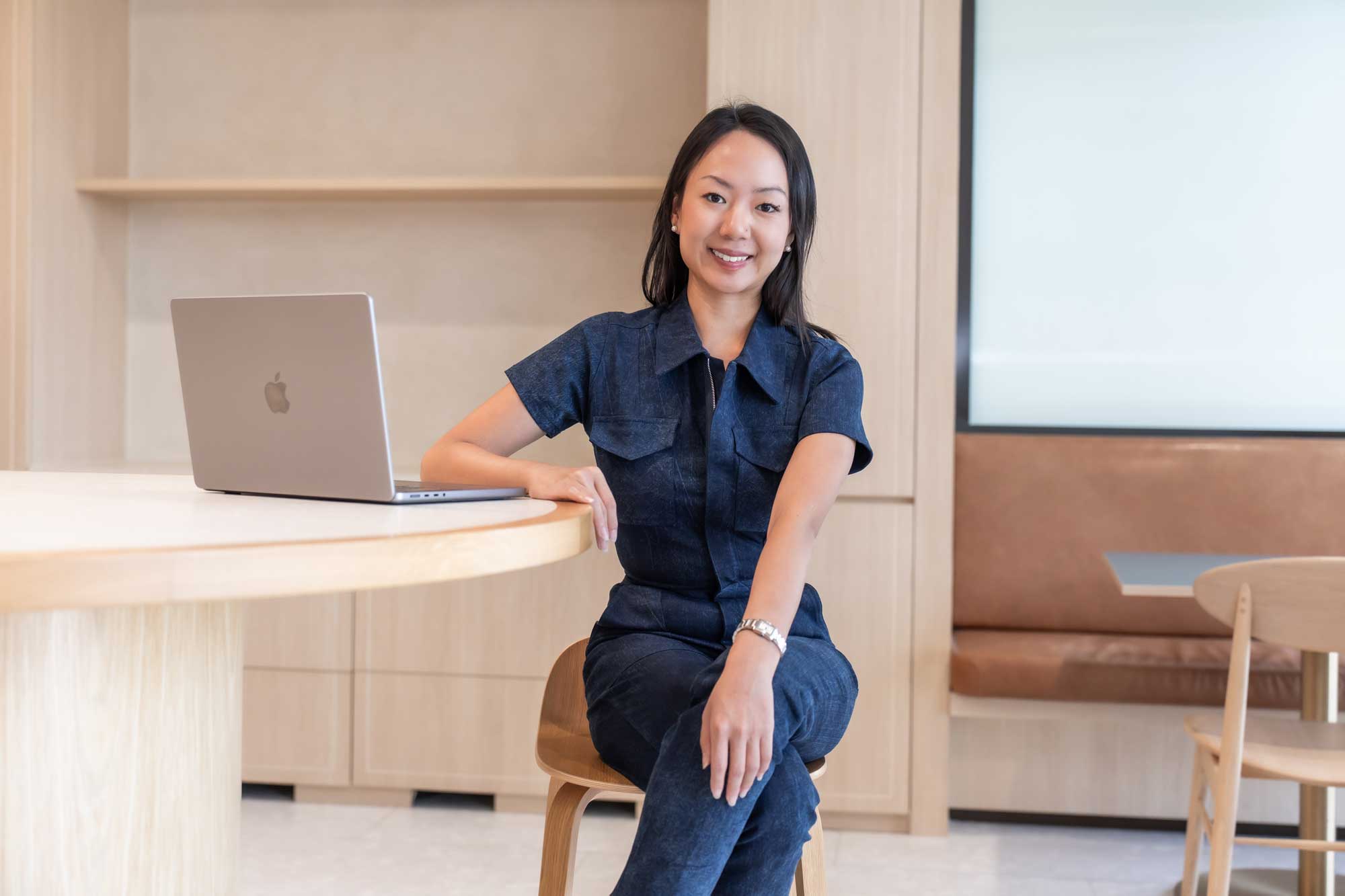
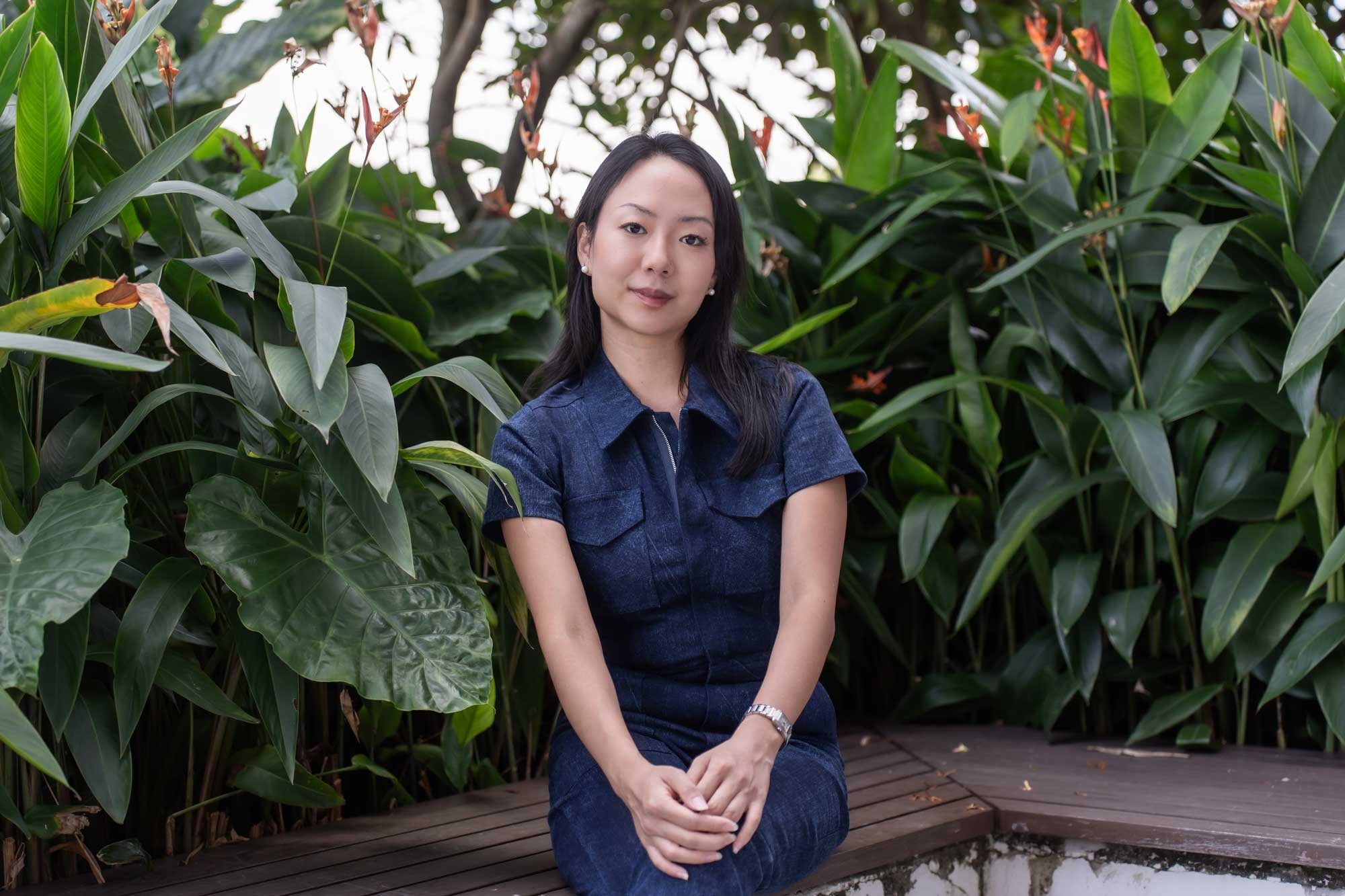
She received the Dsg Scholarship in 2025. Photo by Tony Chan, Lumiere Photography.
Article by Narelle Yabuka.
Many find themselves caught between excitement and unease when discussing the impact of artificial intelligent on the creative fields. Rachel Poonsiriwong purposely sits somewhere in the middle, preferring neither to resist nor embrace AI uncritically, but to understand it.
As an interaction designer, Poonsiriwong has been adapting to new AI tools at speed. “We are in a state of flux at the moment because of how the industry and the tools we know have shifted so rapidly. It also means doing vibe coding,” she says, referring to the emerging use of natural language in AI-driven software development.

Every single thing is being questioned in the field of human-computer interaction.
— Rachel Poonsiriwong
But the change has also prompted her to reckon with the shifting role of the designer, why we design things the way we do, and beyond that, how AI impacts the human experience. Fittingly, Poonsiriwong is also a HCI researcher, and to this side of her activity, she brings a long-held interest in people and culture.

Now, as a 2025 Dsg Scholarship recipient, she is pursuing a Master in Design Studies (Mediums) at Harvard University’s Graduate School of Design, and collaborating with the MIT Media Lab. Through her studies, she is examining human-AI relationships and exploring how digital systems shape behaviour, perception, and agency over time.
The need for such considerations couldn’t be more pressing, and Poonsiriwong is revelling in the opportunity to riff off industry thought leaders.
Climate and AI is one of the topics we talk about. It’s not a very comfortable conversation to have, because people are excited, and we feel like we need to explore these technologies as designers. But questioning why we do things the way we do, and the impact on the environment, is crucial.
— Rachel Poonsiriwong
Seeking a middle ground in the “grey mirror”
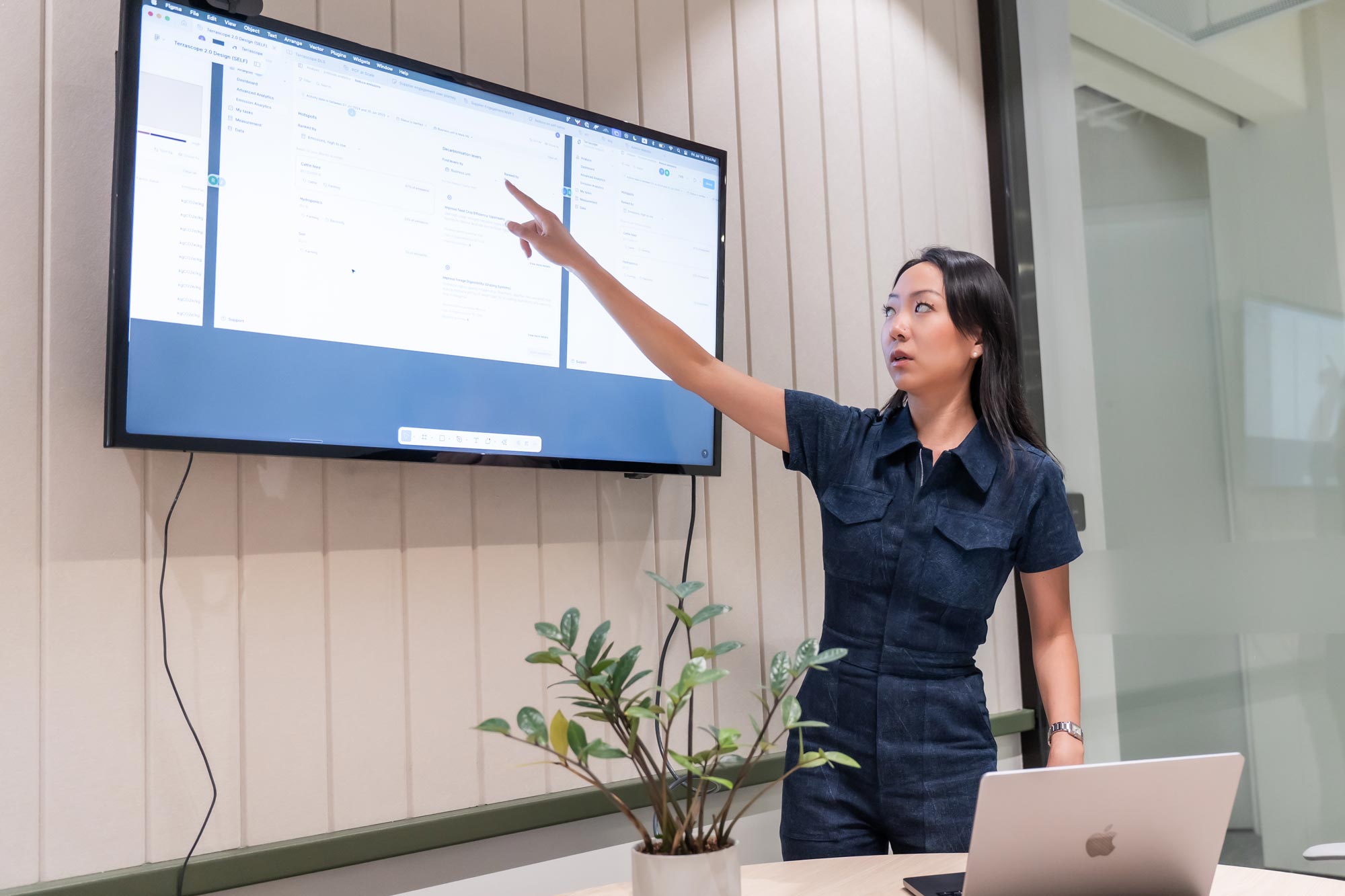
Poonsiriwong positions her thinking and her work deliberately in what she calls the “grey mirror” – a nuanced space (neither black nor white, dystopian nor utopian) where technology reflects both human potential and vulnerability. She argues for a more responsible middle ground that acknowledges both AI’s benefits and its uneven social and environmental impacts.
It makes sense, therefore, that she originally found her way into the world of interaction design not through technology as such, but through people. In 2017, a hackathon introduced her to user-experience design through a project focused on improving mobility for wheelchair users in urban environments. It revealed the power of user-centred design to create tangible social impact, shaping her belief that empathy, access, and agency should sit at the heart of technological systems.
While studying interaction design with a major in art history at the California College of the Arts, she volunteered her design and research skills to civic and social organisation ShelterTech, helping to develop digital COVID-19 resource guides for people experiencing homelessness in San Francisco.
Professional experience at AI startup Scale AI in San Francisco and climate-tech startup Terrascope in Singapore exposed her to both the technical side of AI, and the collaborative approach needed to navigate changing regulatory requirements. But as valuable as these experiences were, something was missing for Poonsiriwong
The path to being a good design ancestor

She decided to redirect herself to HCI research through her postgraduate studies. It is a step toward her goal of becoming a what she refers to as “a good grandmother in a future of design where I can share some of the learnings that I’ve discovered, and for this knowledge to generally create better technologies.” Unsurprisingly, a future academic career may also be on the cards.
Looking ahead, as she always is, Poonsiriwong hopes to return home with new frameworks for thinking about AI, interaction, and agency in culturally diverse contexts such as Singapore. She is committed to shaping a design discipline that remains humane, critical, and inclusive, even as the tools continue to evolve.
Designers are valued for their unique perspectives and user-centred perspectives, but the role of ‘designer’ might actually transition to something more like a ‘creative technologist,’ or someone who is also able to implement the final outcome of the work.
— Rachel Poonsiriwong