

Kendrick Tay Aims to Change How Singapore Tells Stories of Our Architecture
He’s helped produce four of Singapore’s architecture pavilions on the global stage. Now, curatorial studies are guiding DesignSingapore (Dsg) Scholarship recipient Kendrick Tay towards a career of meaning making.
Article by Narelle Yabuka.
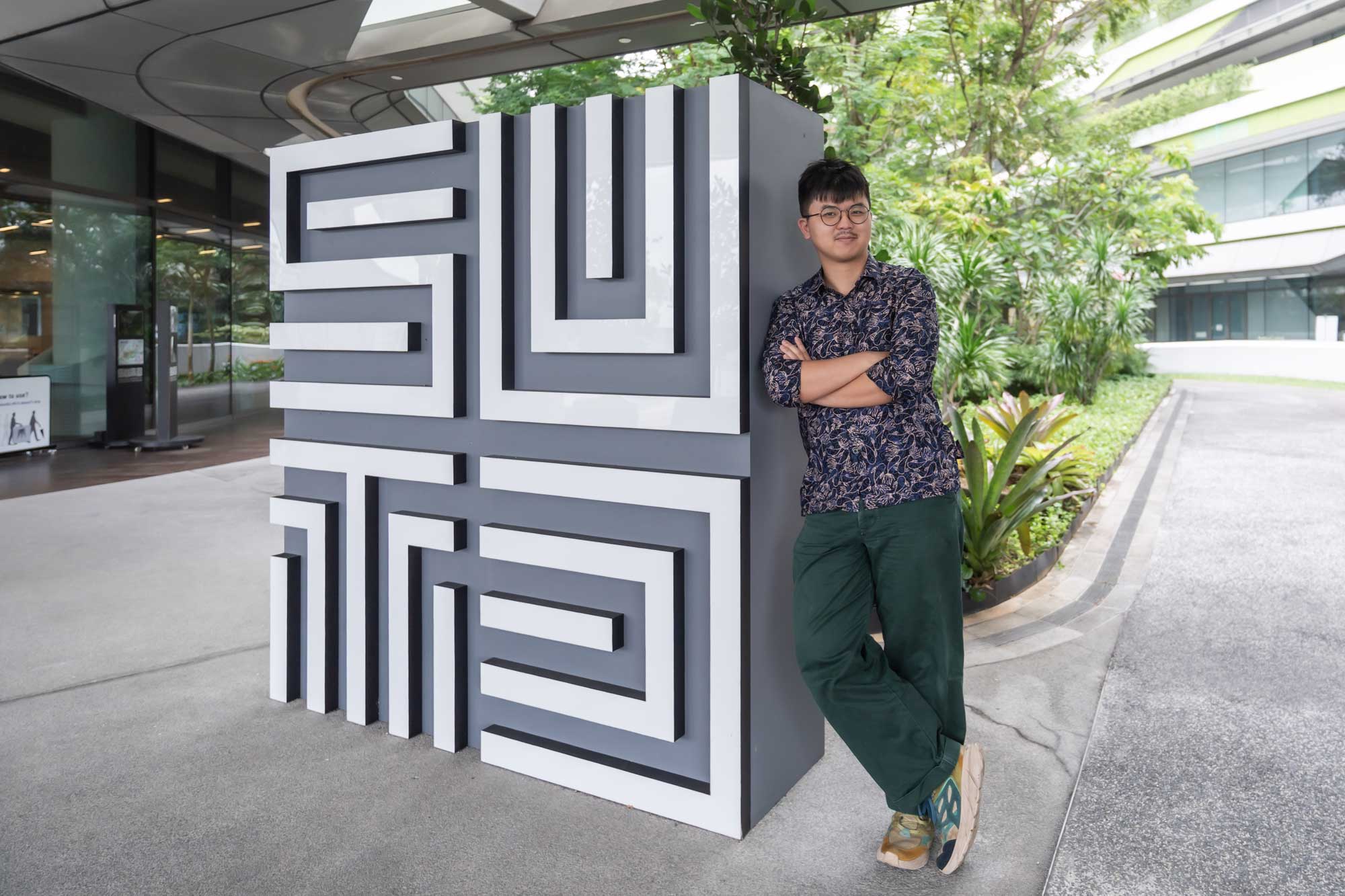
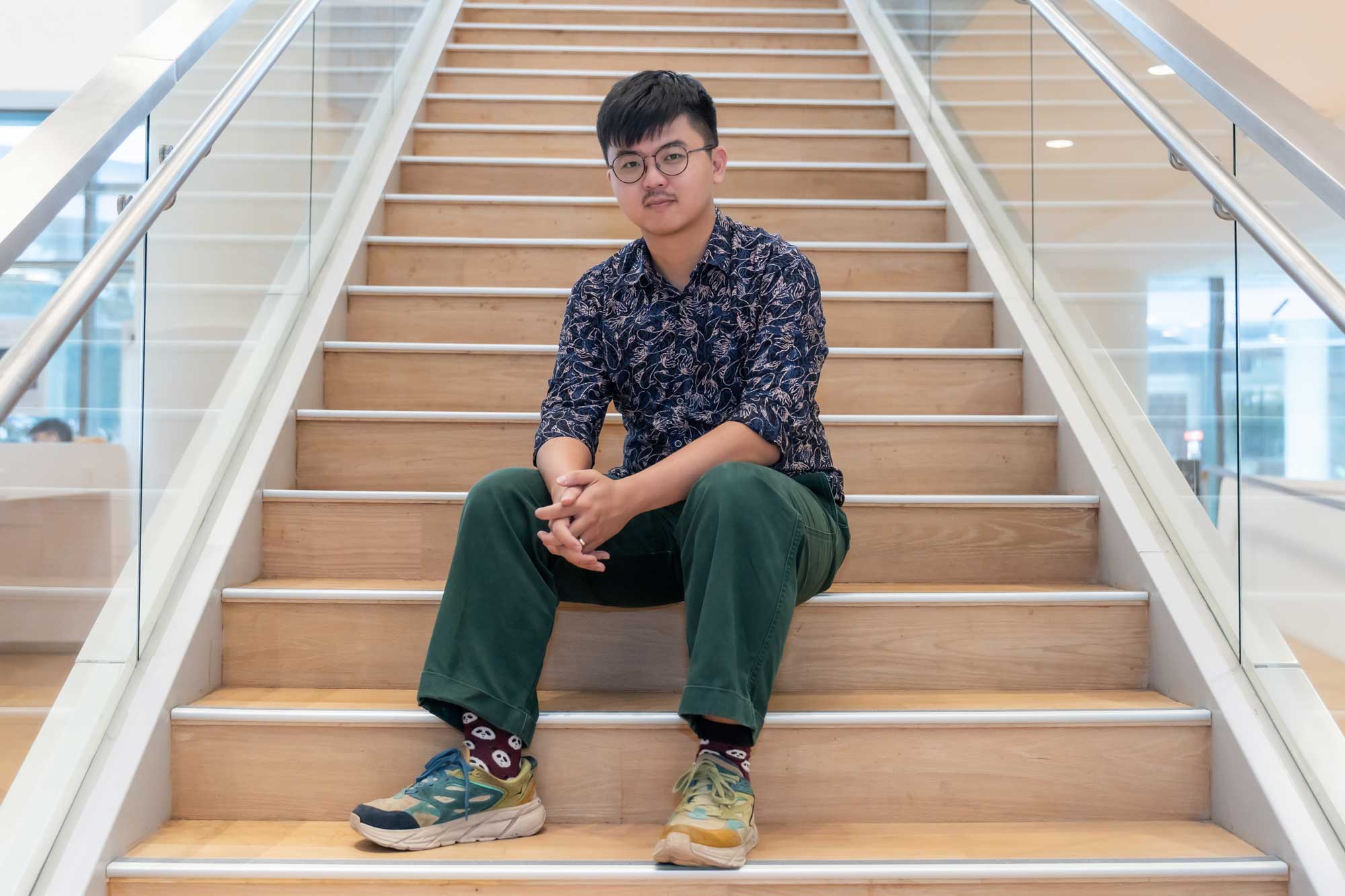
Architecture-trained Kendrick Tay describes himself as “a very kaypoh (nosy) person.” He doesn’t see this as a negative trait. In fact, he credits his curiosity with landing him a job that has deeply influenced his career path.
During a trip through Europe as an undergraduate student in 2016, Tay found himself in Venice just as the Biennale Architettura (International Architecture Exhibition) was opening. He hadn’t bought a ticket, but by chance, he met a German architect who had one extra, so off they went.
At the opening of the German pavilion and other events, kaypoh Tay got talking to (read: asking questions of) everyone he could, including exhibition curators and producers. He enquired at length about the thinking and processes behind the displays.
Of course, Tay made his way to the Singapore pavilion, where one of his professors from the Singapore University of Technology and Design (SUTD) introduced him to a colleague, Professor Erwin Viray. Soon after, Viray was appointed as a curator for the Singapore pavilion at the 2018 Biennale Architettura.
Remembering Tay’s on-site inquisitiveness, and with due consideration of his domain knowledge, Viray invited him to become the Project Manager for the upcoming Singapore pavilion.
Curiosity as practice
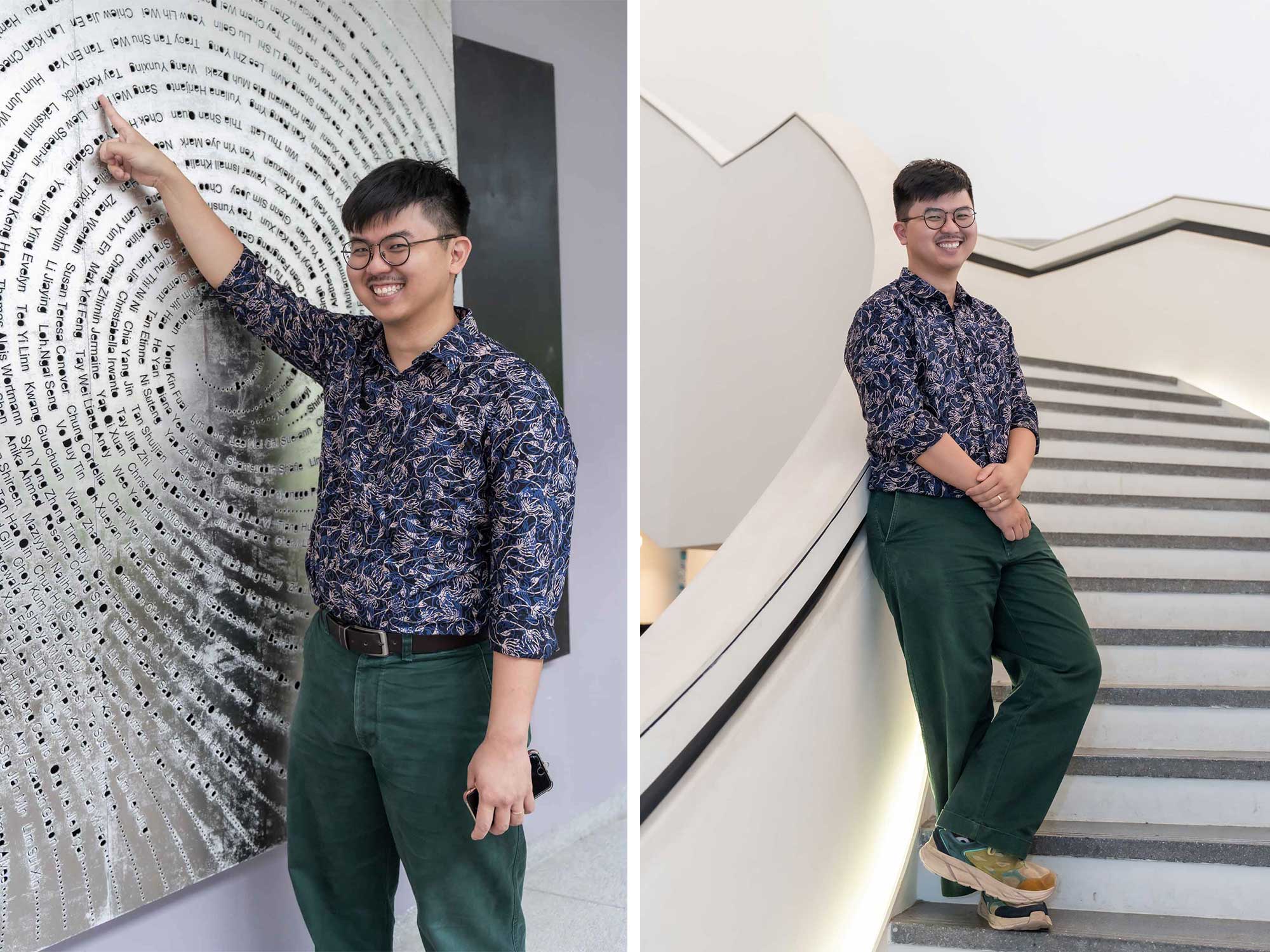
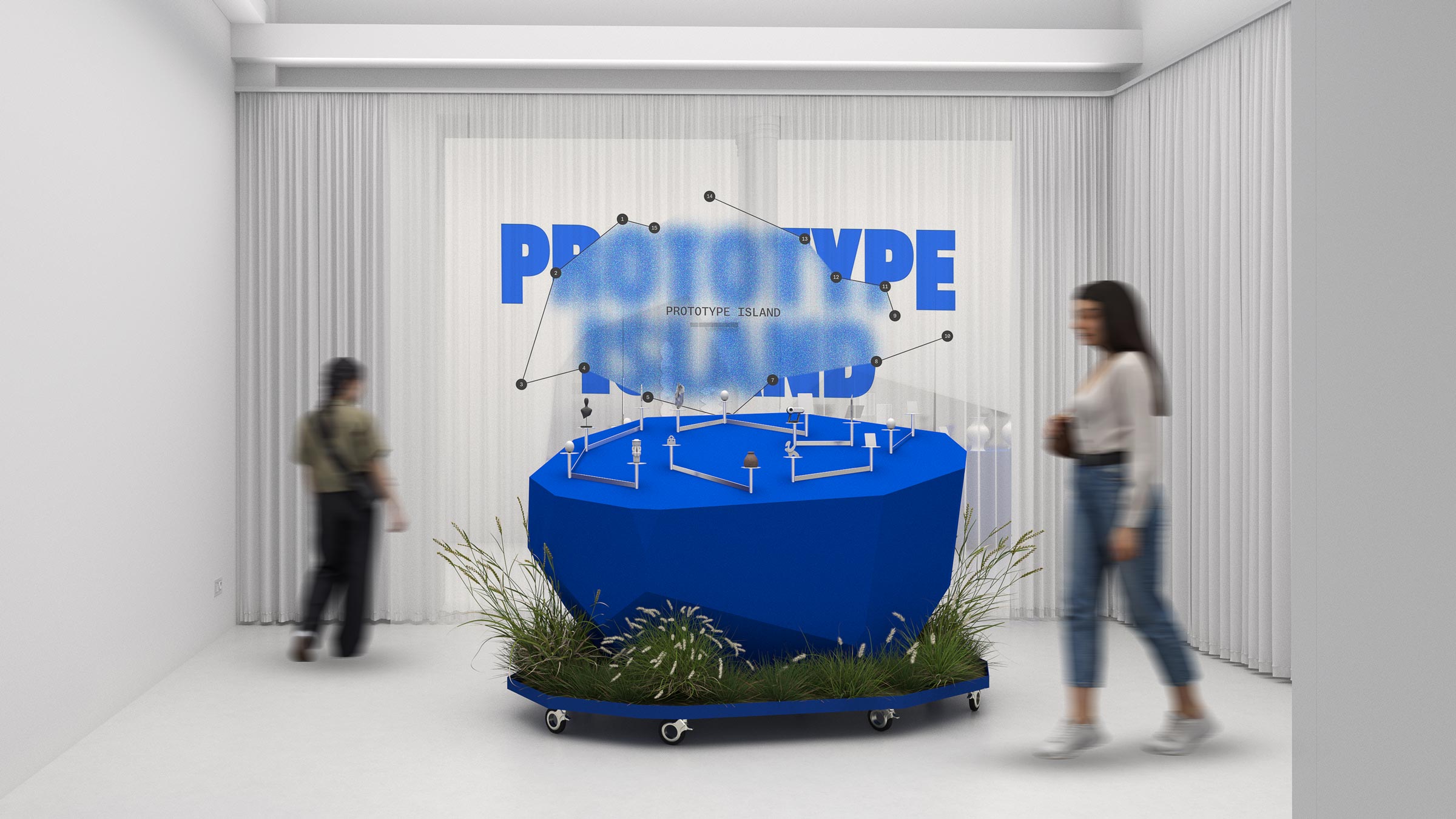
After graduating, Tay continued in that role for the 2021, 2023, and 2025 editions of the exhibition as well. “In Venice, you get to see how each country talks about design and architecture,” he describes, “and everyone has a really different approach.”
What he deduced about Singapore’s presentations is that developmental achievements were well quantified but, in his view, they were not always as strongly supported by the storytelling aspect to explain why things were done. He set his sights on further studies in the curatorial field where his curiosity would serve him well in research and narrative building.

I always thought architecture was a way of influencing how the world works, because a building affects so many people. But over time, I’ve learned that education, telling stories, and creating a public consciousness is a more effective way of doing that.
— Kendrick Tay
From making buildings to making meaning
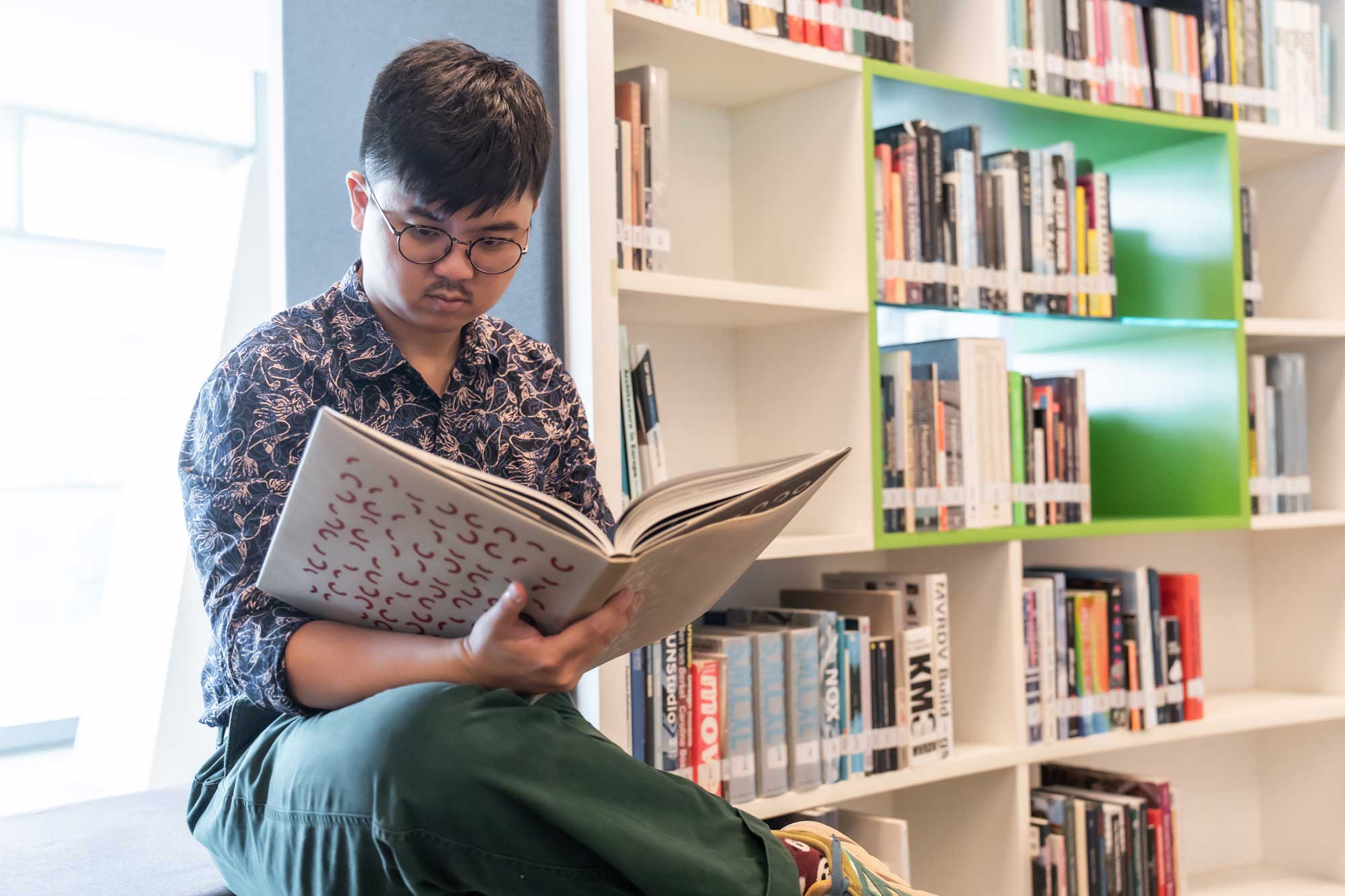
As a 2025 Dsg Scholarship recipient, Tay entered the Master of Science in Critical, Curatorial, and Conceptual Practices in Architecture at Columbia University’s Graduate School of Architecture, Planning, and Preservation. So far, he recounts, “It’s been a very intellectually intensive experience.”
The open-ended nature of the course was a big drawcard for him. “We students are actively encouraged to take classes in unrelated fields, to spread our tentacles out so we can pull from all these things to form our own practices,” he explains. He also greatly appreciates the diversity among his cohort and the networking opportunities.
“One of the good things about the course is that it pulls together people from many different cultures, from all over the world. I hope to gain a degree of perspective on different ways of seeing,” he says. He anticipates applying that perspective when telling stories – through exhibitions – about Singapore to Singaporeans, but also about Singapore to the world.
I’m trying to refocus on the people, the context, and the histories of place. I want to link all that up to form a greater storyline.
— Kendrick Tay
Connective intelligence and future dialogue
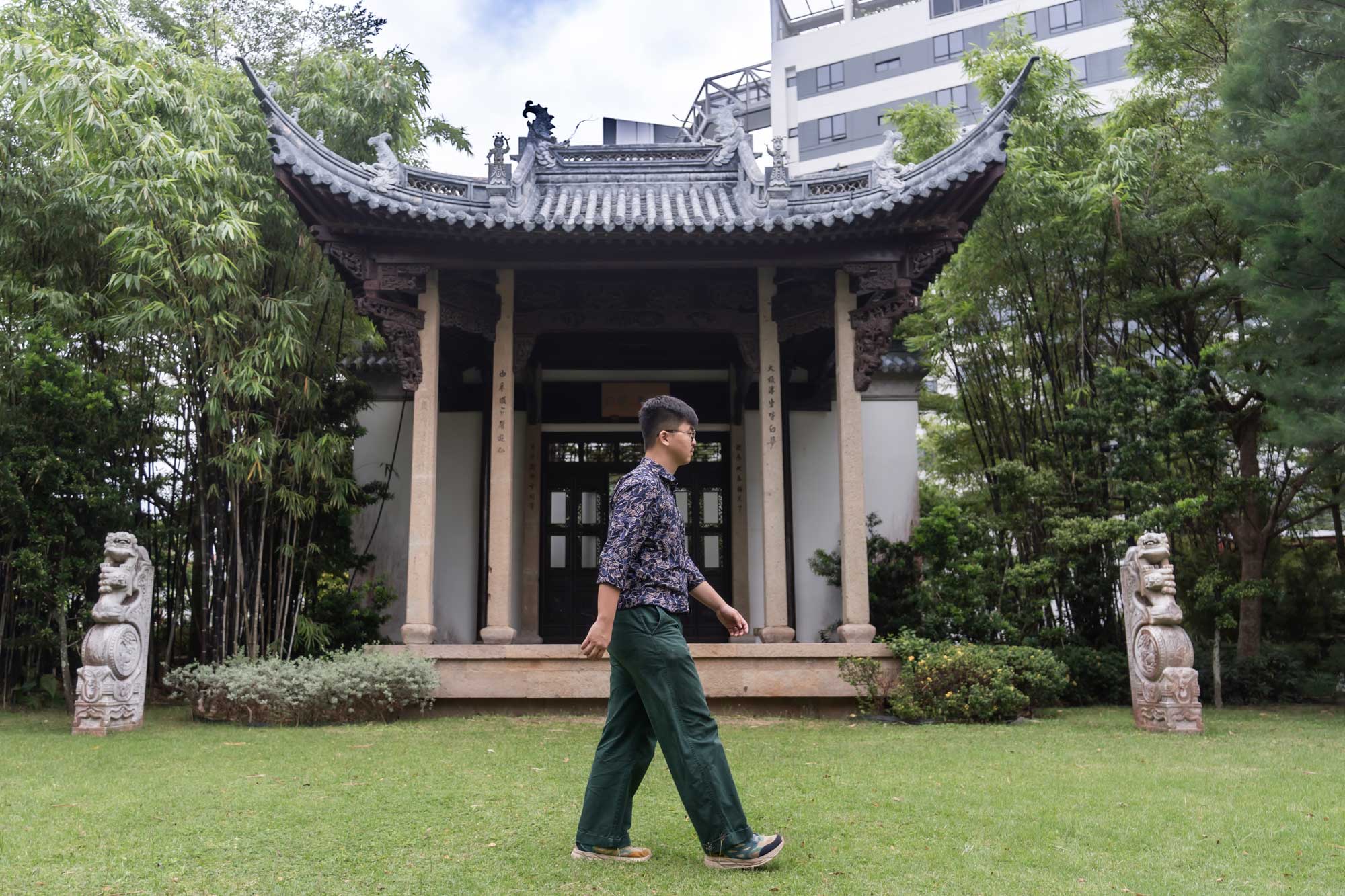
A consistent undercurrent in Tay’s discussion about his curatorial future is the concept of collective improvement for Singapore. He is keen to contribute to scholarship and discussion on topics such as tropical architecture, governing and planning with data, and the relationship between design and labour.
I want to create an environment where we are able to find and have deeper, more interesting conversations about topics, between different groups of people. The exhibition is a medium for allowing conversations to happen.
— Kendrick Tay
But while the meaning of things is central to his thinking, he is not forgetting the process of exhibition making. He’s already contemplating the nature of his future curatorial practice in Singapore. Currently, he’s envisioning a mix of curation and production.
“These two halves of the house often don’t talk to each other as much as they need to,” he explains. He continues, “How do you create interesting exhibitions with high production values? It all comes down to storytelling. It’s by crafting compelling creative stories that you actually get to influence how people think. For me, that’s the fun part of this.”