

Edmund Zhang Wants Everyone to Play for a Greater Good
Interdisciplinary designer Edmund Zhang is not kidding about the positive impact of play – as he embarks on studying design for play as a DesignSingapore (Dsg) Scholarship recipient.
Article by Narelle Yabuka.
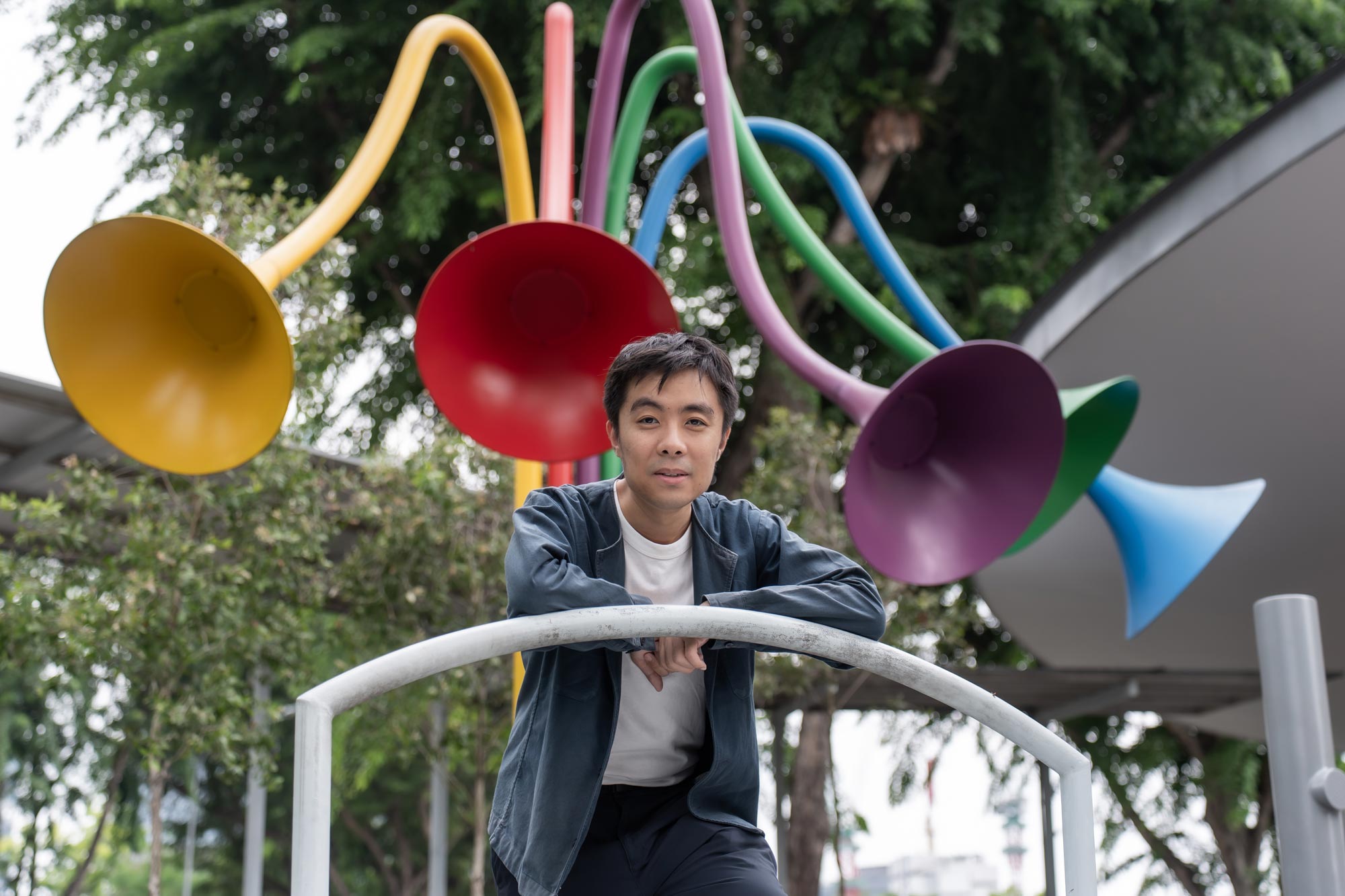
“When people ask me what I’m studying, it’s quite hard to explain, because it can be so abstract and so general,” says 2025 Dsg Scholarship recipient Edmund Zhang. “But at the same time,” he adds, “there’s an intrinsic feeling that it’s essential to our lives.”
He’s talking about play, and when you discover that, his statement makes perfect sense. Zhang is the first Dsg scholar to enter the Master of Arts specialising in Design for Play at the Kolding School of Design in Denmark. Students in the two-year programme design play, for play, and with play.
Such designs are not just for children as their potential impact is far broader. Through real-world projects in Singapore, Zhang has already demonstrated that play can be the common language for design solutions that emotionally resonate with people of all ages and backgrounds. Its power resides in its capacity to unlock different perspectives and, therefore, entice new and beneficial experiences.

I’m very keen to further explore how play can be used as a serious tool to help us shape the ways we live, learn, and care for one another.
— Edmund Zhang
Play-driven design for well-being

During his studies in Kolding, Zhang aims to find the right language that will more precisely articulate what play can do. That said, he has intuitively understood play’s value for years.
During childhood, he developed a love for comedy, story-telling and play from TV shows such as Comedy Night (搞笑行动). He studied animation at Ngee Ann Polytechnic, and keen to create delight beyond the entertainment industry, he entered the industrial design course at the National University of Singapore (NUS).
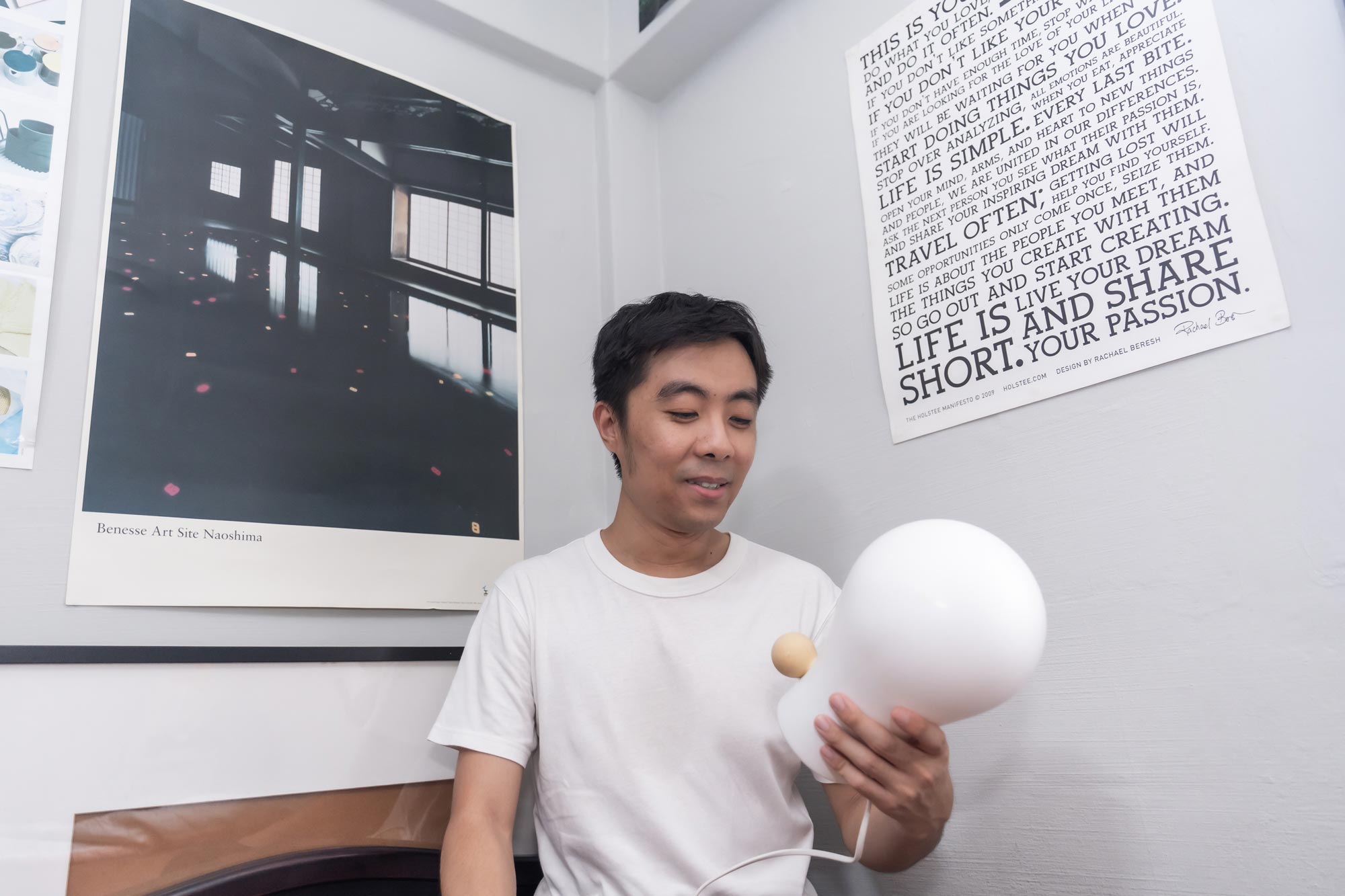
“There was always a sense of playfulness in how I approached my projects,” he recalls. His Squeezy lamp, for example, made use of the satisfying gesture of squeezing (rather than the tapping that we are more accustomed to these days) to activate the light.
After graduating, through personal and professional projects, Zhang continued on the trajectory of designing with play to drive well-being, such as a touch-first jigsaw puzzle for the visually impaired. “Oftentimes,” he says, “it’s about using a playful approach to challenges, from sustainability to ageing to mental wellness.”
In his most recent job, as a Senior Product Experience Designer at strategic design studio NextOfKin Creatives, Zhang was part of the team that designed an active-ageing programme with a playful twist.
Silver Pride Lion Troupe (created with design partner and cultural heritage consultancy Bridging Generations) harnessed key elements of the widely beloved art form of lion dance, reworked for age appropriateness. The programme enticed hard-to-reach male seniors to participate and received the President*s Design Award ‘Design of the Year’ accolade in 2025.
In Singapore, design is often seen as an economic driver. It’s tied to improving business or certain processes. But it goes beyond that. We should see the importance of it as a societal driver as well.
— Edmund Zhang
Finding the delight in everyday experiences
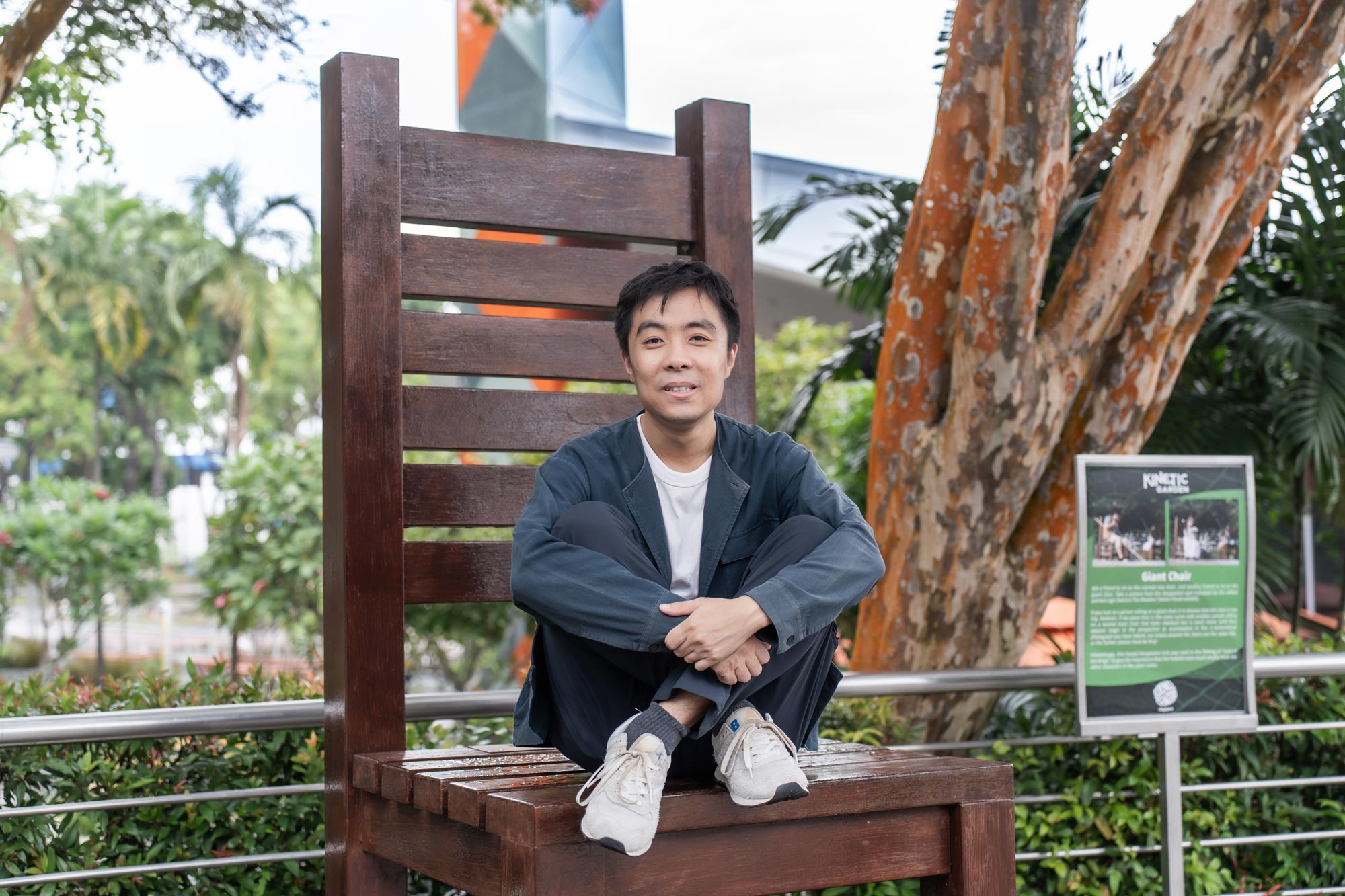
Zhang is thinking bigger about the role of play on the urban environment and even on policy making. He and a course mate are currently working on a project to elevate people’s experiences of waiting at bus stops. Ideas include decals for the glass walls of the bus-stop shelter that will allow people to play games using condensation; and light projections that will allow shadow puppetry on the ground. The bigger implication, suggests Zhang, is that urban design could be more about allowing people to express themselves than limiting undesirable behaviours.
There’s a whole movement focused on hostile architecture. Instead of restricting behaviours, how can we reinvent them? Play can be a very powerful agent for that.
— Edmund Zhang
When he returns to Singapore, Zhang will be putting his newfound fluency in articulating design for play to good use. Already, he’s considering developing his own design practice or a research lab that will enable him to apply play in the real world. “I want to advocate for play’s value, so people see it as an equally important driver of innovation,” he says.